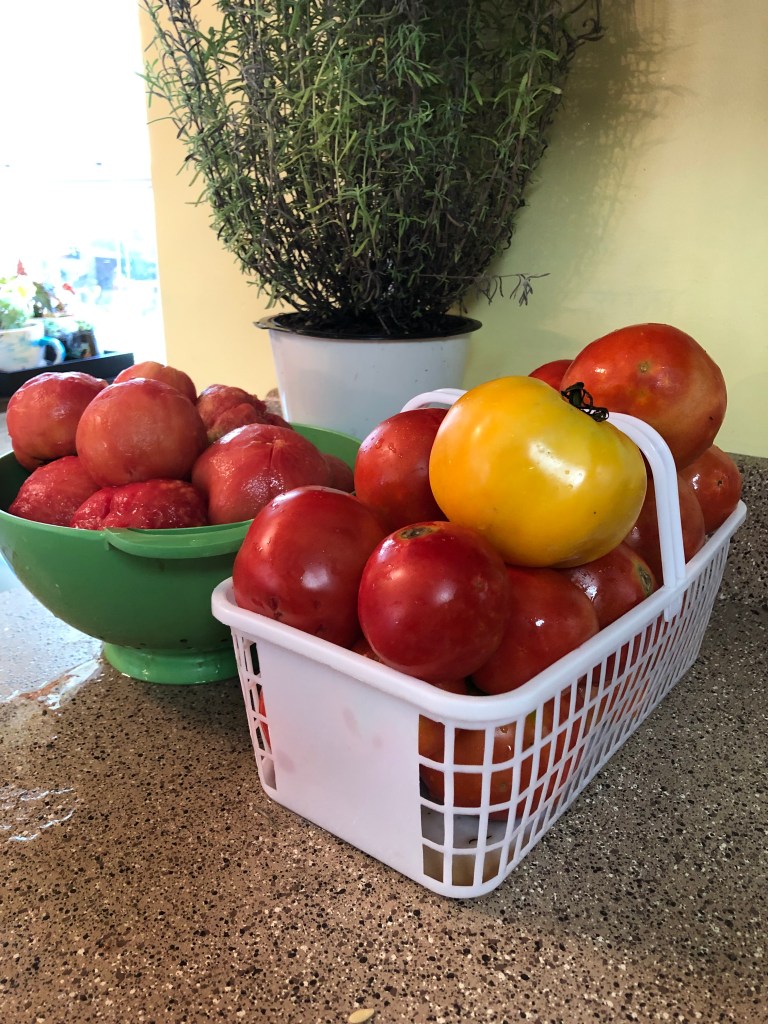
What do I do with all these tomatoes?
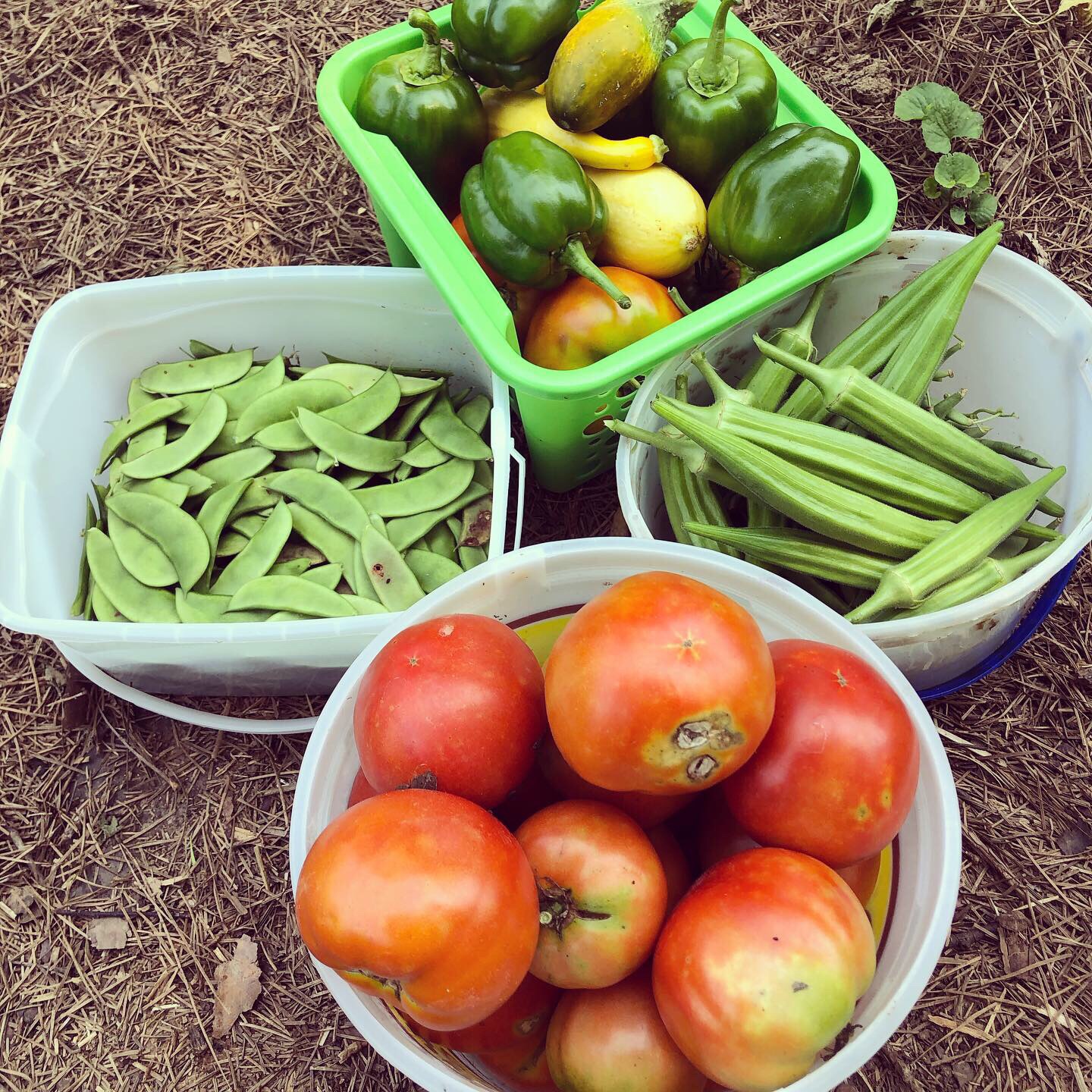
One of my favorite things to grow in the garden is tomatoes. Few things bring back the nostalgia of childhood like the taste of a perfectly ripe, homegrown, Southern tomato. I think the very first thing I ever tried to grow, at the little red house in our first year of marriage, was tomatoes. That crop was horrible. But around the third year, we were overrun with delicious ripe tomatoes. As I brought them in by the 5 gallon bucketful, I began trying out ways to preserve them for the cold days of winter. I tried salsa, ketchup, tomato jelly, and finally, marinara sauce. The preserved tomato type we use most is, hands down, marinara. So, this year, after a few years of not a great tomato crop, when I finally got enough ripe ones, I set to canning. I think this is probably the simplest and tastiest recipe yet.
Because it drives me batty to dig for a recipe at the end of a lengthy blog post, I’m going to give you the recipe first… but follow along at the end for more detailed instructions.
So, it’s not totally necessary to remove the tomato skins, especially with this recipe, it just means that your sauce will be a bit more chunky. However, for educational purposes, I went ahead, just so I could share the quickest, easiest way to get it done.
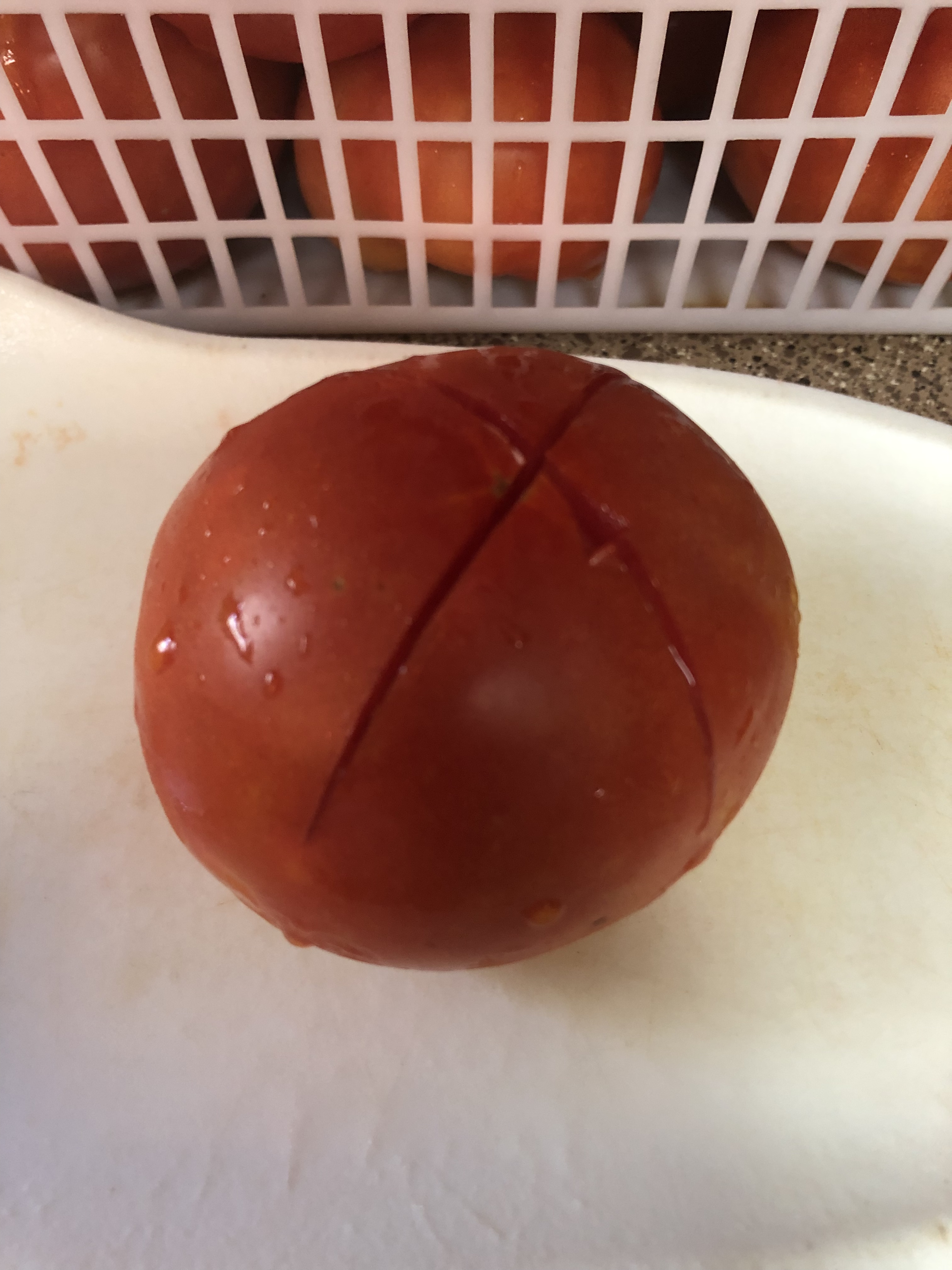
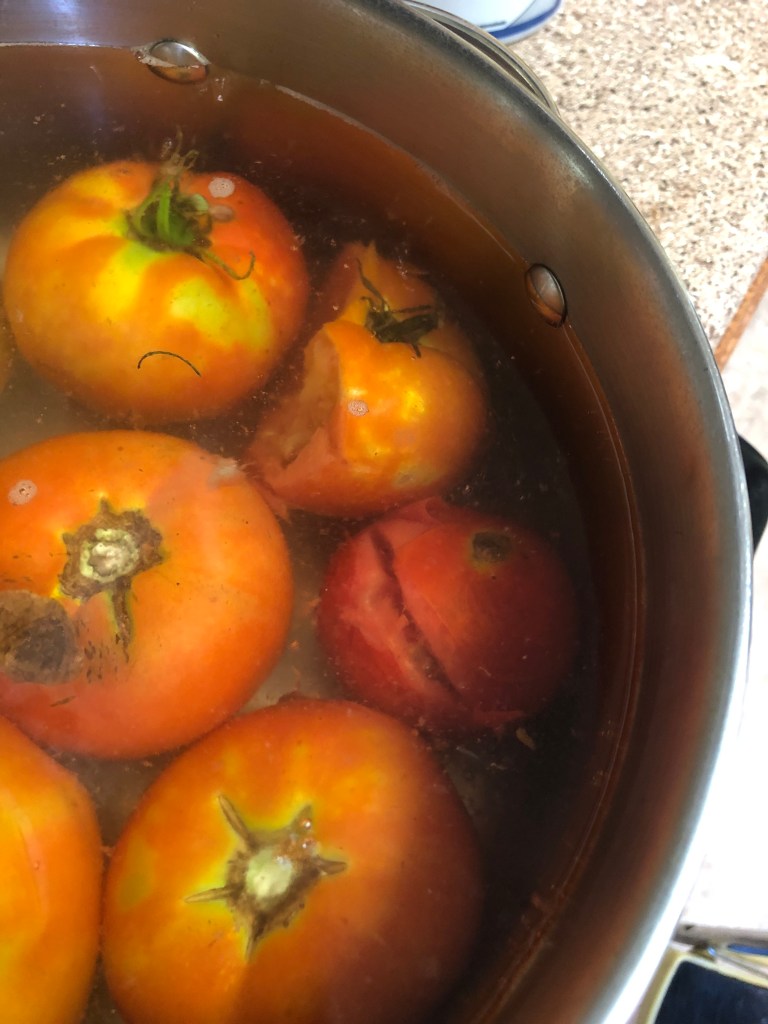


To quickly remove the peels, slice a shallow X along the bottom of the tomato. Dip the tomatoes into a boiling water bath for about one minute. You should see the peels beginning to lift. Then, with an ice water bath ready, transfer the tomatoes from the boiling water into the ice bath for about another minute. This cools the tomatoes enough to be easily handled and also shocks the skins right off. Take each tomato out, one by one, peel the skins off and discard. They should peel off with ease, but if a little remains around the stem area, that’s fine. It’s not going to bother this recipe. You should be left with a bunch of naked tomatoes.
Now that your tomatoes are in the nude, core each one and slice them into quarters. Place the quarters onto a baking sheet lined with foil. It’s messy, but if you work over the baking sheet, you should be able to catch all that delicious juice that will squish out. I should also note, that lining the baking sheets with foil will save you a lot of headache later. Don’t skip that part.
Now, this part is super hard. Only the best cooks can handle this one.
Are you ready?
Sprinkle the baking sheet of tomatoes generously with Garlic Salt. Roast them in a 450F degree oven for about 30 minutes, longer if you want a little char caramelization.
And that is how you flavor your marinara sauce. That’s it. Trust me. It’s delicious.
Now, if you’re feeling extra, or you just don’t trust me, feel free to add in some onions, peppers, basil, oregano, etc onto that sheet pan and roast it all in there, but I believe less is more for this. In any case, this is your flavor step. Whatever flavor you want this sauce to have, roast it with them now. Go nuts. Or just make it easy on yourself and trust me.

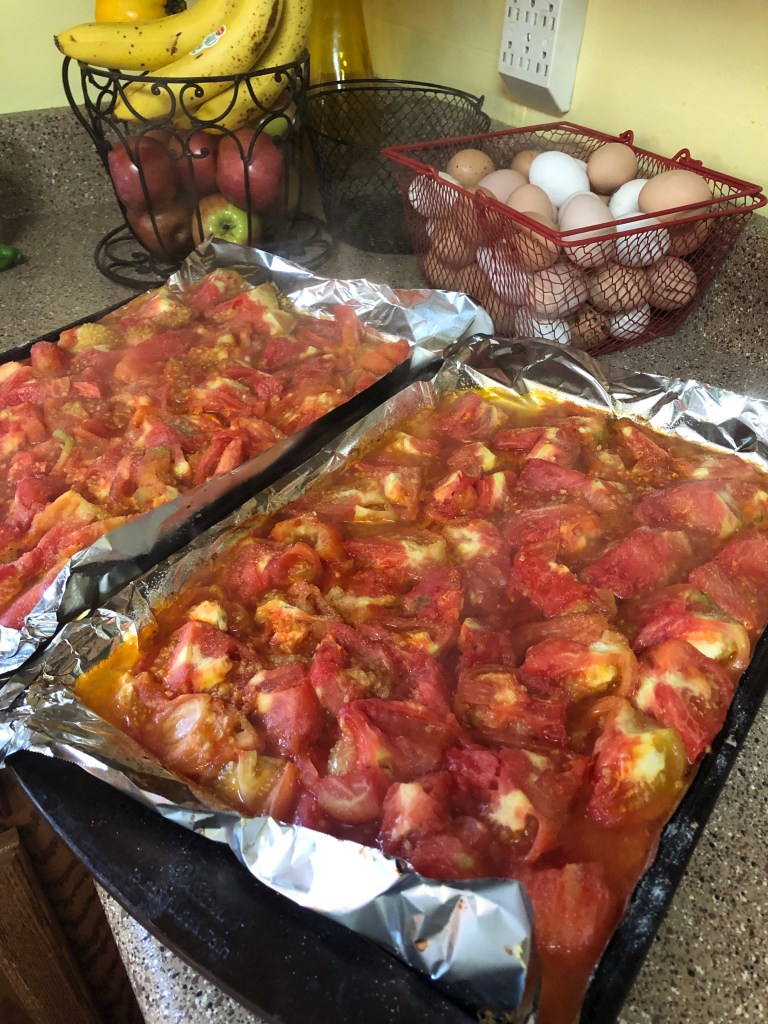
Once the tomatoes are roasted and smelling wonderful and you are starving and want to eat them right now, forget canning… take them out and let them cool. Go for a walk. Feed the kids lunch. Take a nap. Do you.
Then, once they’re cool, comes really the only truly tricky step.
Use the foil to make a sort of funnel and funnel the tomatoes (in batches if you need to) into your blender. Heavy duty foil is your friend. You can figure out another way, I guess, but this seemed like the cleanest way to get juice and meat all in the same place (and preferably not my kitchen counters).
Into the blender they’ve gone, so just blend the daylights out of them. Blend until smooth.


This is a good time for another break… for a couple days, if need be.
Listen, the baby woke up and the big boys wanted supper or some such rubbish and Mama was tired, okay?
I’m going to go with, “This lets the flavors develop.” But in truth, if you’ve got the time, full steam ahead.
(Also, if you’re just looking for a good tomato soup, this is the perfect consistency and you’re done.)
If you’re ready to thicken this up a bit and get canning, transfer your pureed tomatoes to a stock pot and put it on high heat. Add in 12oz cans of store bought tomato paste. I needed four. I just kept adding them until I was happy with the consistency. I really don’t think a marinara can be too thick, so err on the side of more cans. Bring it to a boil, then turn down and let simmer for an hour or so… until you get the kids in bed and Husband surprises you by coming home early to put the baby back to sleep.
When you’re happy with your sauce. It’s canning time!
Ladle the sauce into hot jars, screw hot lids on, and process in a rolling-boil, hot water bath for 15 minutes.

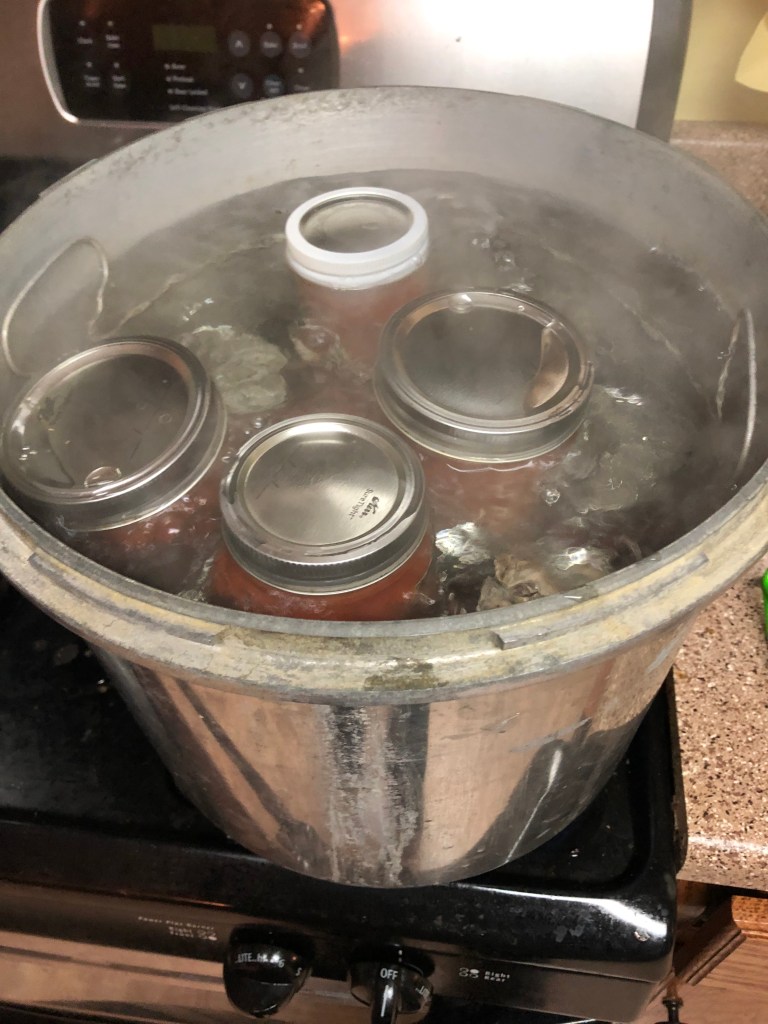
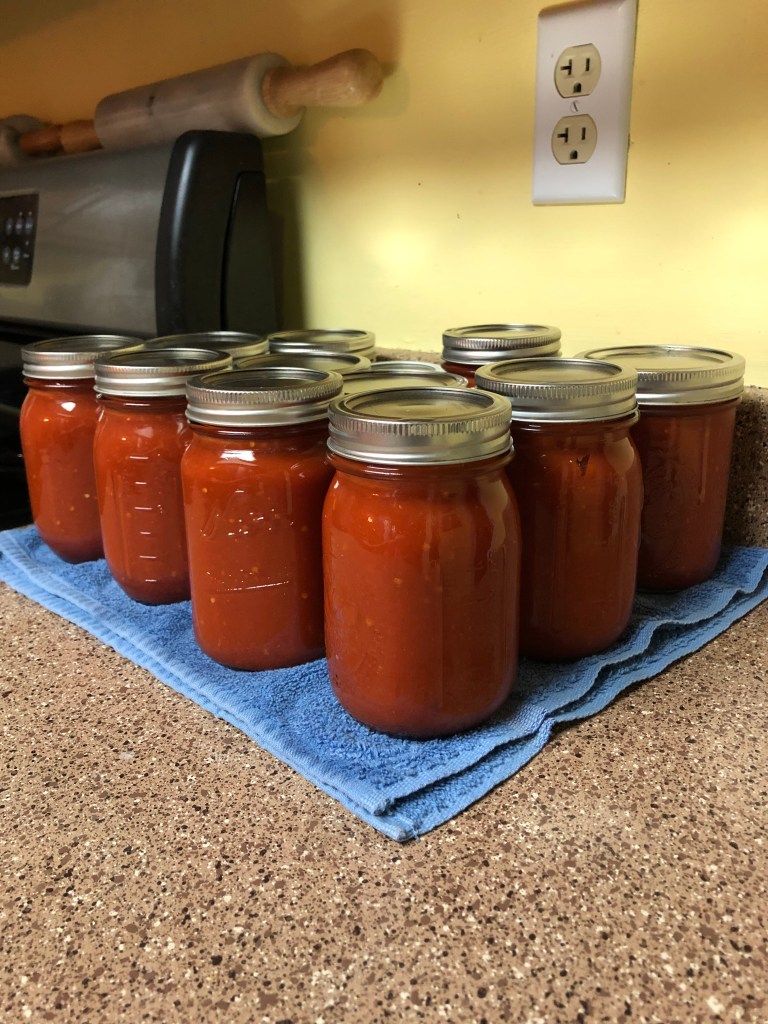
Remove from water bath after 15 minutes and let cool on a dish towel on the counter. Before long you’ll hear the happy “POP!” of fresh canned goods sealing themselves up. When you can push on the center of the lid and it doesn’t spring back, they are sealed. (But give them a few hours; they seal as they cool. If for some reason, they don’t seal, either refrigerate those and use soon, or process them again with fresh lids.)
Tomorrow, you can make lasagna… or spaghetti… or meatball casserole… or… with your Garden Fresh Marinara Sauce. Like grandma used to make. I promise you’ll hear Dean Martin when you eat it.




 The Feathered Forge